

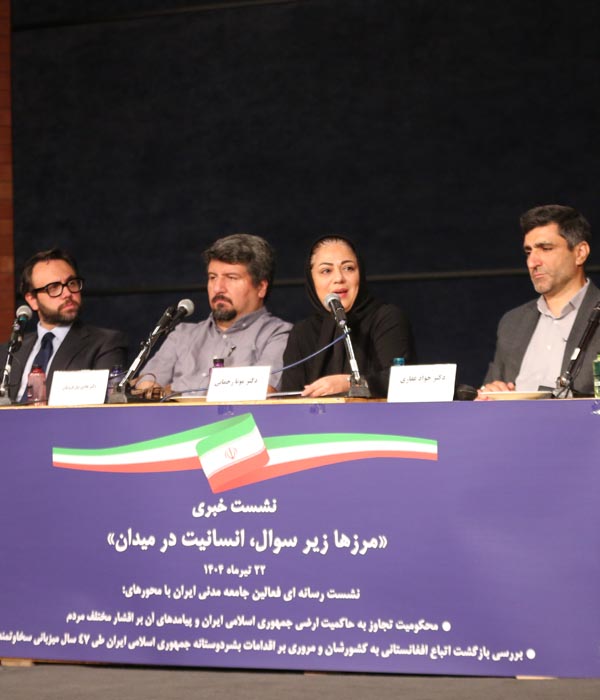
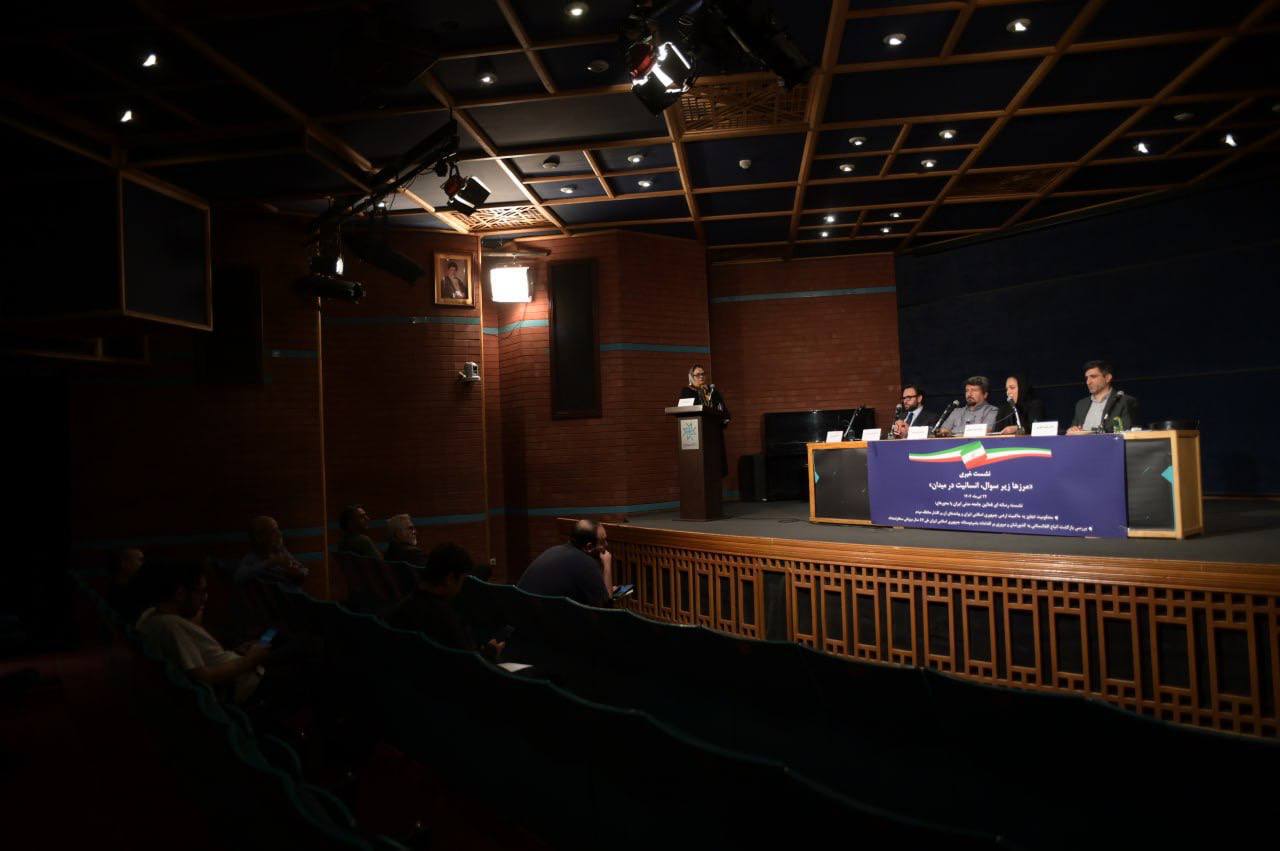
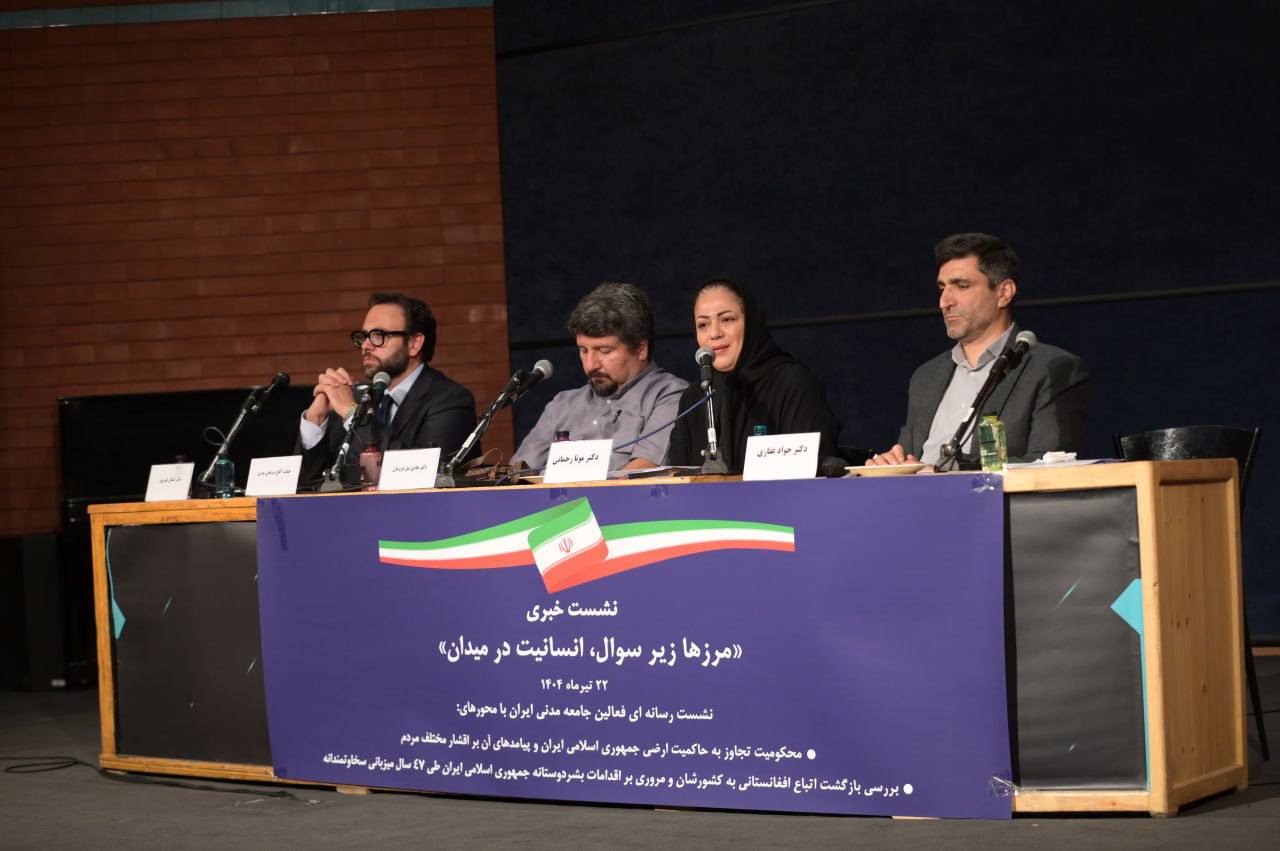
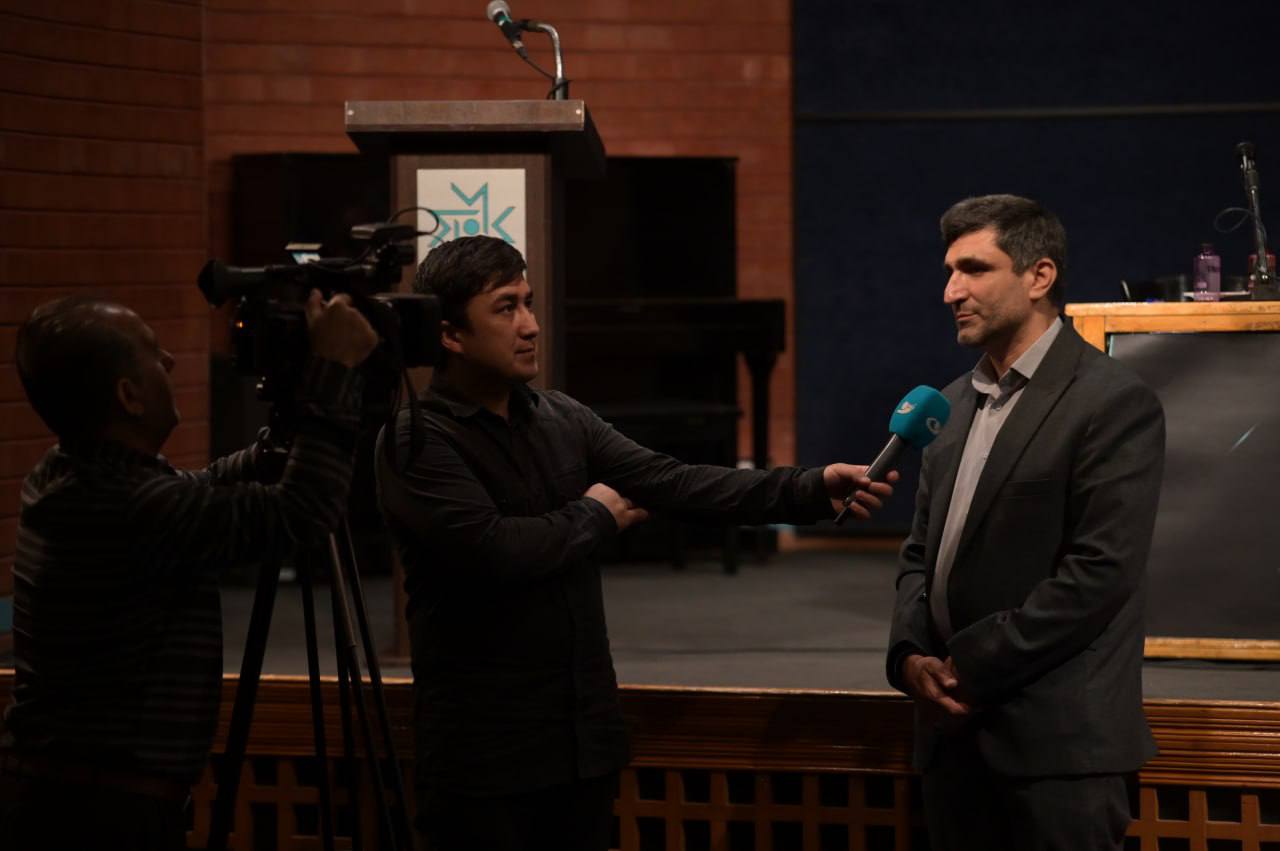
According to the Public Relations of the IFDA, a press conference titled “Borders Under Question; Humanity on the Field” was held with the participation of a number of prominent civil society activists. The event reviewed recent developments in the country, the issue of the violation of the territorial sovereignty of the Islamic Republic of Iran and its consequences on various segments of society, the return of nationals to Afghanistan, and also humanitarian actions taken by the Islamic Republic of Iran during 47 years of generous hosting.
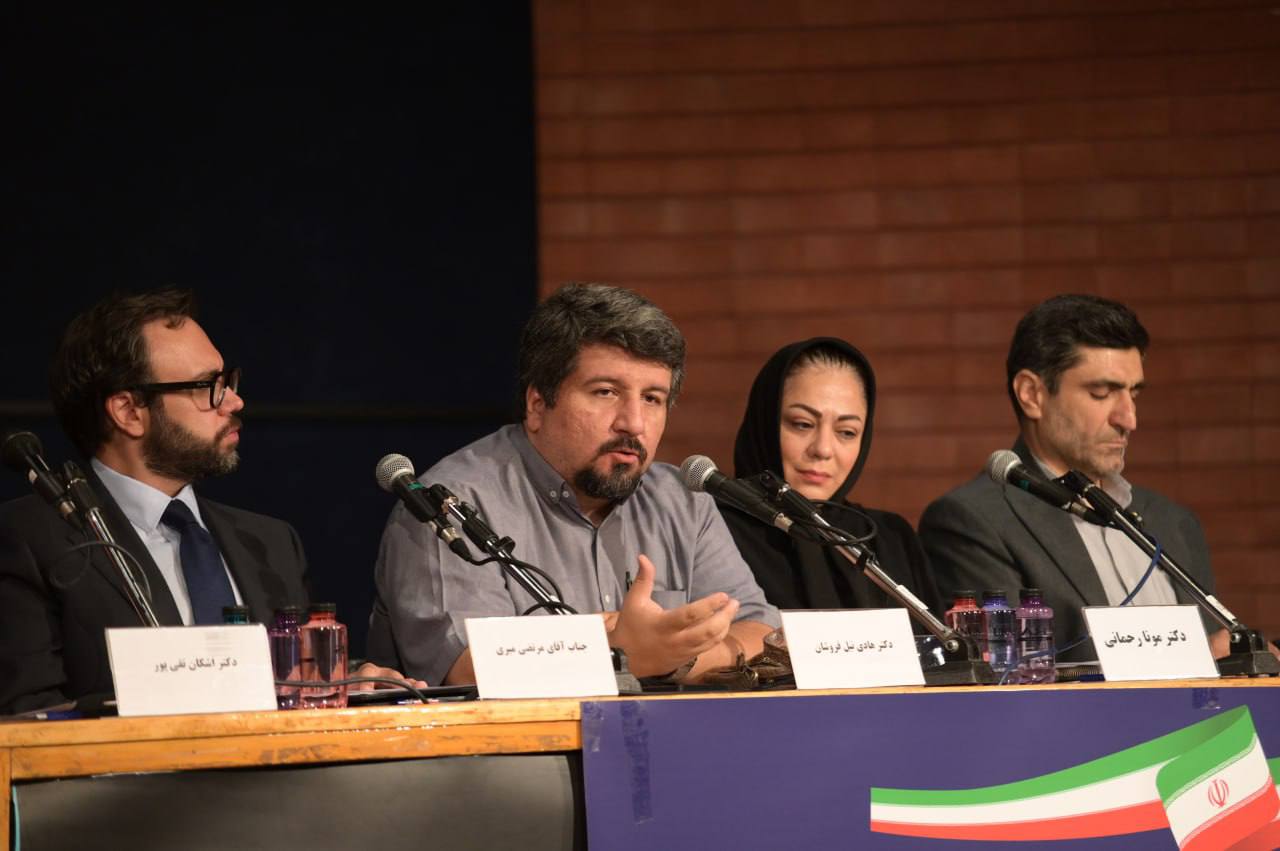
In this meeting, Dr. Mona Rahmani (CEO of the International Institute of Tomorrow Development Activists and Board Member of the International Coordination Network of Humanitarian Actions), Dr. Hadi Nilforoushan (faculty member at Shahid Beheshti University and strategist of innovation and technology ecosystem), Mr. Morteza Miri (international economic activist), Dr. Ashkan Taghipour (CEO of Nikgaman Jamshid Institute and Board Member of the National Network of Charity and Philanthropic Organizations), Dr. Javad Ghafari (CEO of the Support Association for Recoverees and Board Member of the International Coordination Network of Humanitarian Actions), with facilitation by Dr. Shadi Azimi, a university professor, spoke and participated in discussions.
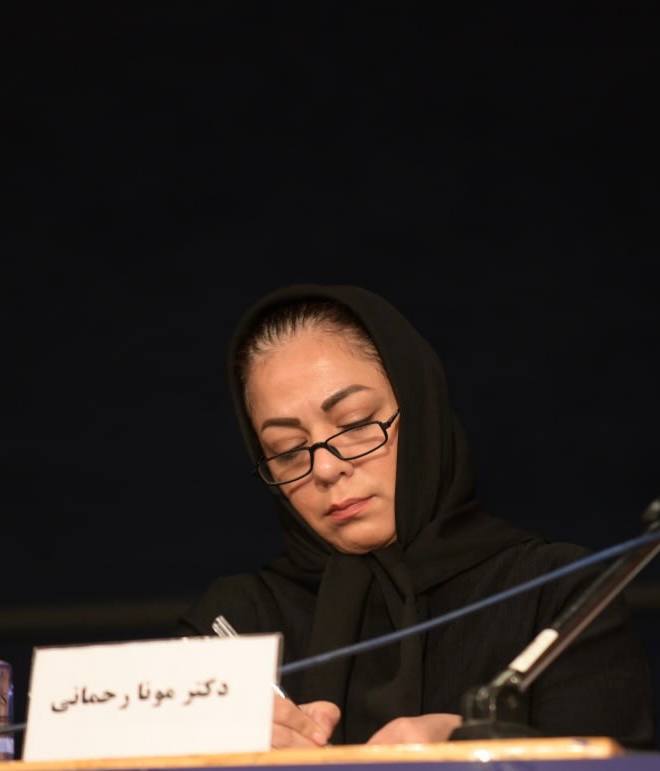
At the beginning of the session, Dr. Hadi Nilforoushan stated: “What has happened is in the past; however, its lessons and experiences must be our guiding light for the future. The formation of civil movements and the clear, free voice of nations is a point to which we must pay attention and use it to build a better future. Technological developments such as artificial intelligence and the internet, though great human achievements, can turn into dangerous tools in the hands of great powers; these technologies sometimes work against the interests of nations and threaten global security.
He added: “I believe that the killing of scientists in this war is unprecedented in modern history and is one of the saddest manifestations of this humanitarian crisis that the world must respond to. Science and technology are not neutral; they always carry values and ideologies. Unfortunately, in recent years, we have witnessed an increase in the assassination and murder of scientists on an unprecedented scale; this phenomenon poses a serious threat to scientific freedom and human progress, which the global community cannot ignore. Scientists, as responsible citizens, must commit themselves to humanitarian and charitable goals and steer science toward serving society.
The faculty member of Shahid Beheshti University said: “This issue is not limited to one country; the assassination of scientific elites could happen anywhere in the world tomorrow. Therefore, countering this threat and supporting scientific freedom is the responsibility of all nations and international institutions.”
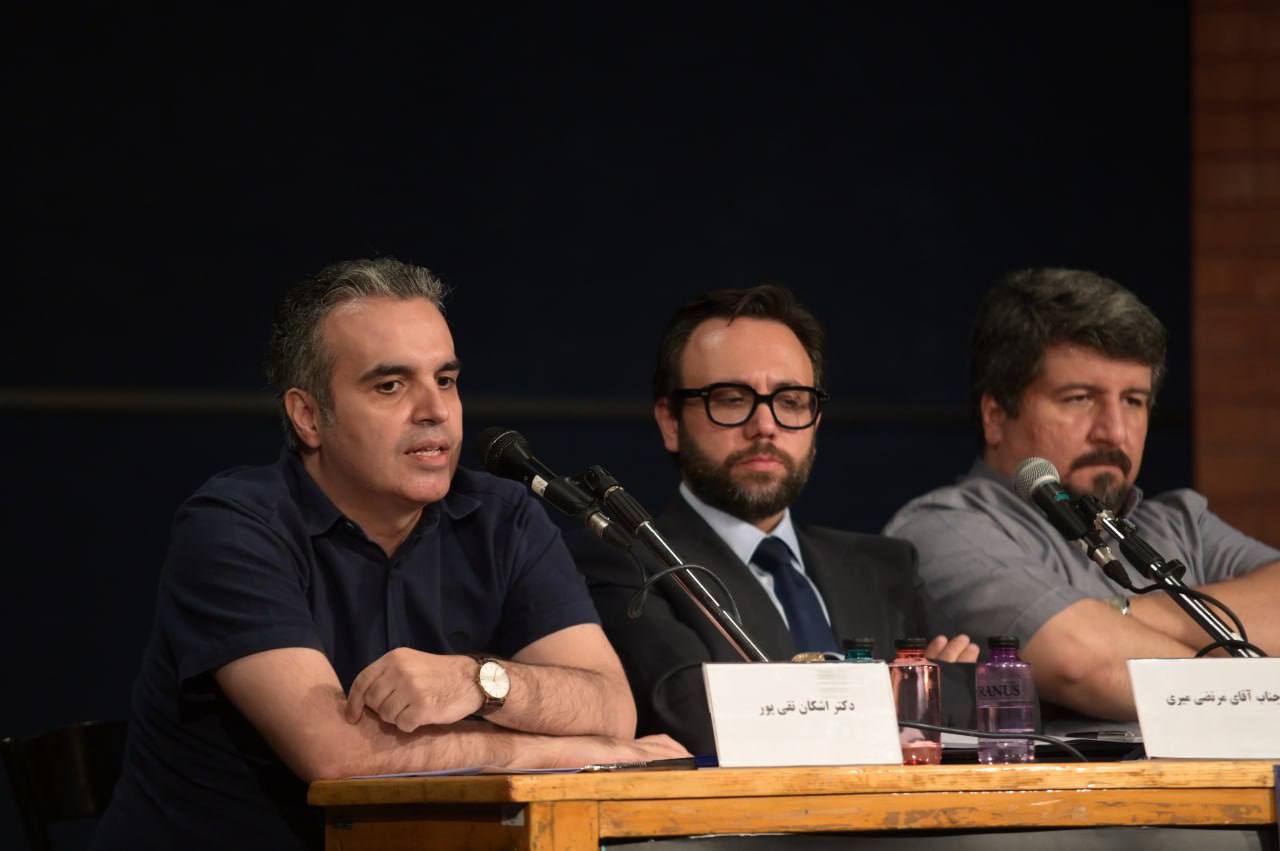
In another part of the event, Dr. Ashkan Taghipour said: “The impact of these 12 days of imposed war for us Iranians goes beyond a temporary event; Iran is not just a geographic territory but a shared cultural and identity heritage. If we are truly Iranian, we must think beyond geographic borders about cultural Iran and strive to preserve the name, language, and Persian culture, because this common home is our only refuge against crises and challenges ahead.
He stated: “In these difficult conditions, as members of a civil society, we have the duty to accept our grief and sadness and alongside it, with hope and deep reflection on the ups and downs of Iran’s history, find a way to revive this land and culture. Iran is diverse and united; just as Persian carpet weaving has been done for thousands of years and has always been a symbol of our identity and authenticity, today too we must resist these threats. Sanctions and international pressures have deeply harmed Iran’s economic and social structures. Poverty, deprivation, and social problems have become more complex, and many efforts have been made for skills training and support of vulnerable groups, but the reality is that harsh and unilateral pressures have put millions of people’s lives in very difficult conditions.
The board member of the National Network of Charity and Philanthropic Organizations noted: “Those who benefit from supportive organizations such as the Imam Khomeini Relief Foundation and Welfare Organization face daily problems of these vulnerable groups. The war has made these dear people experience even harder conditions; places where families are deprived of basic services, small businesses are destroyed, and many are worried about providing basic needs such as food and children’s education. Also, orphanages, elderly care centers, and addiction rehabilitation camps face serious challenges in these critical conditions. When the war continues, supporting these vulnerable groups becomes more difficult and vital, and special attention must be paid to them because their human rights are under threat.
He continued: “War is not just a military event, but a human catastrophe whose destructive effects spread over the whole society. This crisis means a total violation of human rights and the right to life and human dignity. We must raise this cry loudly and show the world that war means destroying life, families, and the future of a nation.”
Iran’s Culture and Economy Under Pressure from Sanctions and Invasion / Human Rights Violations and Economy in the Imposed War; The Voice of the Iranian People from Culture to Livelihood
In another part of the event, Morteza Miri, an international economic activist, stated: “I am an Iranian citizen, an economic activist, and heir to a 205-year-old business in foreign trade, the trade of handmade carpets, which is the most important symbol of Iranian culture, art, and peace. A symbol that has always been before the eyes of politicians and people of the East and West. From the United Nations to the White House, from the Kremlin to the Royal Palace of Norway, from the Hermitage Museum to the Metropolitan Museum. From Isfahan carpets used in the coronation of Danish kings to Malayer carpets used in the burial of Pope Francis. At midnight on June 13, Israel invaded my country and violated Iran’s national sovereignty for false reasons and without any legal backing. This war had, however, started long before—from May 8, 2018, with the U.S. withdrawal from the JCPOA and on August 6, 2018, with Executive Order 13846 of the U.S. president imposing maximum economic pressure, which resulted only in heavy pressure on the lives and livelihood of the people who asked for nothing but life, welfare, and development. That economic war led to an illegal, inhuman, and illegitimate aggression by Israel, which contrary to claims did not conduct pinpoint strikes but also targeted civilians’ homes, cars stopped at red lights, infants, children, pregnant women, athletes, artists, and relief workers—ordinary, non-military, innocent people.
He added: “I pass over the political and military consequences of the war and address what this obvious aggression brought and brings to the economy and activists. Sudden aggression against a country with a fragile, sanctioned economy means closing off breathing spaces for active foreign trade businesses, meaning cutting access to raw materials, workforce downsizing, increasing unemployment, destroying tourism, shutting down related businesses, severe contraction of the economy, inability to meet livelihoods, spreading poverty, death of hope, and loss of mental security. Let me give an example: handmade carpets and handicrafts are the most popular economic sector in Iran with an extensive employment chain of over 2.5 million people, most of whom are women and girls in villages. Including their families, the livelihood of about 10 million Iranians depends on the vitality of this sector, nearly equal to the population of Greece or Sweden. However, international sanctions, especially by the U.S., and Israeli aggression have broken their backs. Carpet exports have fallen 90% in the last seven years, putting these businesses at risk of destruction. As the special rapporteur on cultural rights reported in 2013: ‘Sanctions and wars can systematically restrict cultural rights, especially in societies whose economies depend on cultural products.’
The international economic activist expressed: “Let’s review some clauses from UN international documents: Article 2, paragraph 4 of the UN Charter obliges all countries to refrain from the threat or use of force against the territorial integrity and political independence of states. Article 1, paragraph 2 of the International Covenant on Economic, Social and Cultural Rights states that ‘No one shall be deprived of the means of subsistence.’ Article 11, paragraph 1 of the same Covenant recognizes ‘the right of everyone to an adequate standard of living, including adequate food, clothing, housing, and continuous improvement of living conditions.’ Article 1, paragraph 8 of the Declaration on the Right to Development calls for countries to cooperate to eradicate poverty and improve livelihoods, especially in developing countries. Article 25, paragraph 1 of the Universal Declaration of Human Rights affirms ‘Everyone has the right to a standard of living adequate for health and well-being, including food, clothing, housing, medical care, and necessary social services.’ Sustainable Development Goals 1.1 and 2.1 talk about ending poverty in all forms. Article 14, paragraph 2 of the Convention on the Elimination of All Forms of Discrimination Against Women highlights the need for special support for rural women and their traditional jobs. Principle 8 of the UN Guiding Principles on Business and Human Rights prohibits states from using economic tools to violate human rights.
He noted: “Sanctions and aggression violate Article 2 of the UN Charter, deprive the Iranian nation of their means of livelihood, violate the people’s right to basic living standards, instead of reducing poverty, expand it, violate the UN Sustainable Development Goals and the CEDAW convention, and use economic tools to violate human rights.
All these violations of principles, conventions, charters, and declarations are carried out with the full support of human rights claimants. Those who call these atrocities ‘dirty work on behalf of the West’ and pay no heed to the weakening foundations of international law. The behavior of these governments in the past few years in sanctioning and attacking an entire nation has made human rights and civil society lose their ethical foundation and international credibility.
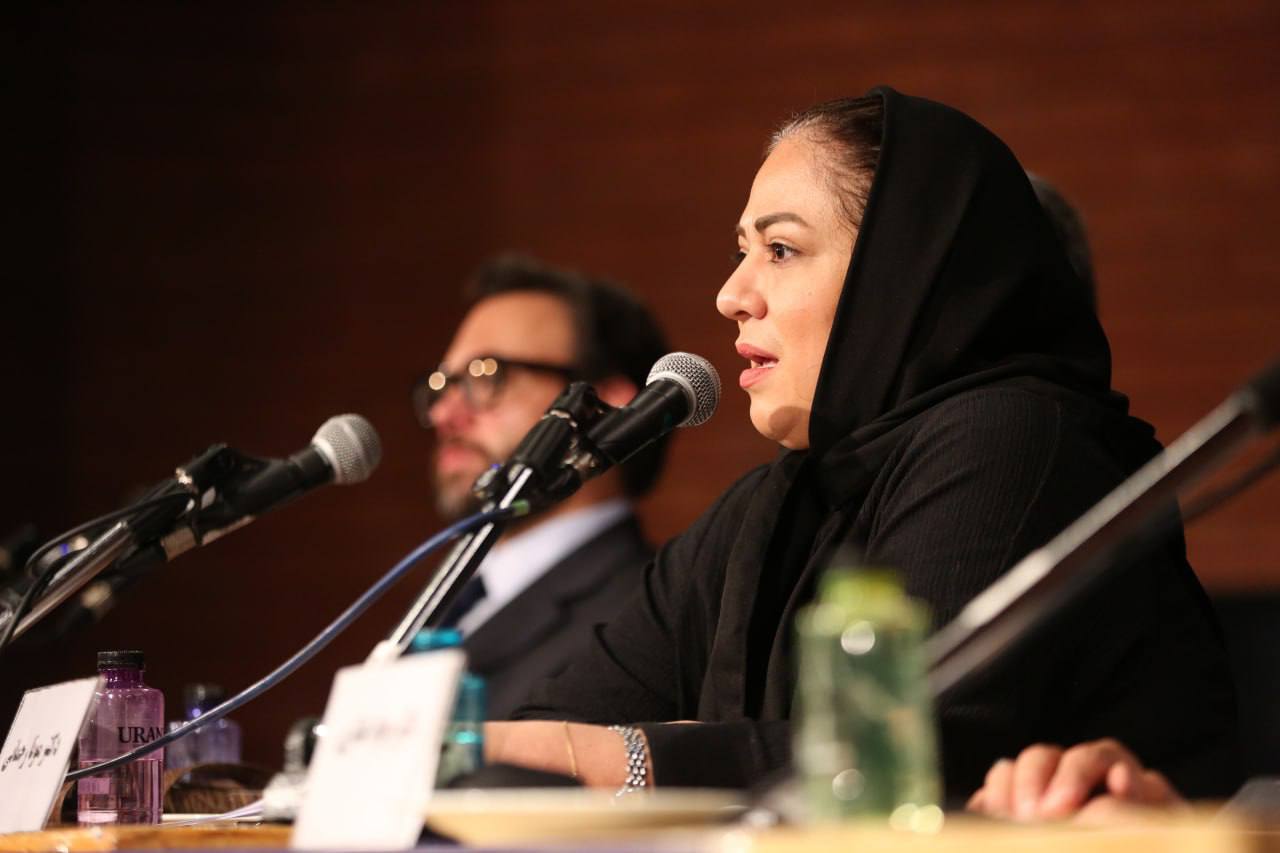
In another part of the event, Dr. Mona Rahmani said: “A significant number of Afghan nationals who had lived in Iran for many years were forced to return to Afghanistan in recent years. The Islamic Republic of Iran has been one of the most important hosts for Afghan refugees for nearly five decades, providing shelter and support despite all difficulties. The mass return of Afghan nationals to their homeland in these difficult conditions is not only a humanitarian challenge but also a political and social issue that has profound impacts on both countries.”
She added: “Afghans in Iran form a vital segment of society and economy. Many are workers, students, artists, and contributors to civil society. Their expulsion under pressure affects their lives and the social fabric of both Iran and Afghanistan. The international community should assist Iran and Afghanistan in managing this crisis humanely and sustainably.”
Dr. Rahmani emphasized: “Civil society in Iran is not limited to NGOs or charities; it includes all social actors who advocate for human rights, humanitarian aid, and cultural preservation. The shared history and cultural ties between Iran and Afghanistan are a unique asset that should be used to promote peace, development, and regional stability.”
In conclusion, the speakers stressed the urgent need for the international community to recognize the humanitarian crisis created by the war and sanctions, respect the rights of all affected populations, and support civil society’s efforts in Iran and Afghanistan. They called for solidarity and cooperation beyond borders to restore peace, human dignity, and sustainable development in the region.

بدون دیدگاه